Shape lessons for lovable characters · sketch one today
Digital collectibles · lesson track

Sticker Packs, Avatars and Digital Sets

Your mascot does not have to live on paper. Today characters travel as chat stickers, emoji, profile avatars, game skins and collectible series that fans love to complete. The design challenge changes: your character must read at thumbnail size, pull a dozen expressions and still look like the same little friend in every one.

This lesson covers the history in brief, how to plan a set, how to test small-size legibility, and the rights questions to sort out before you publish.
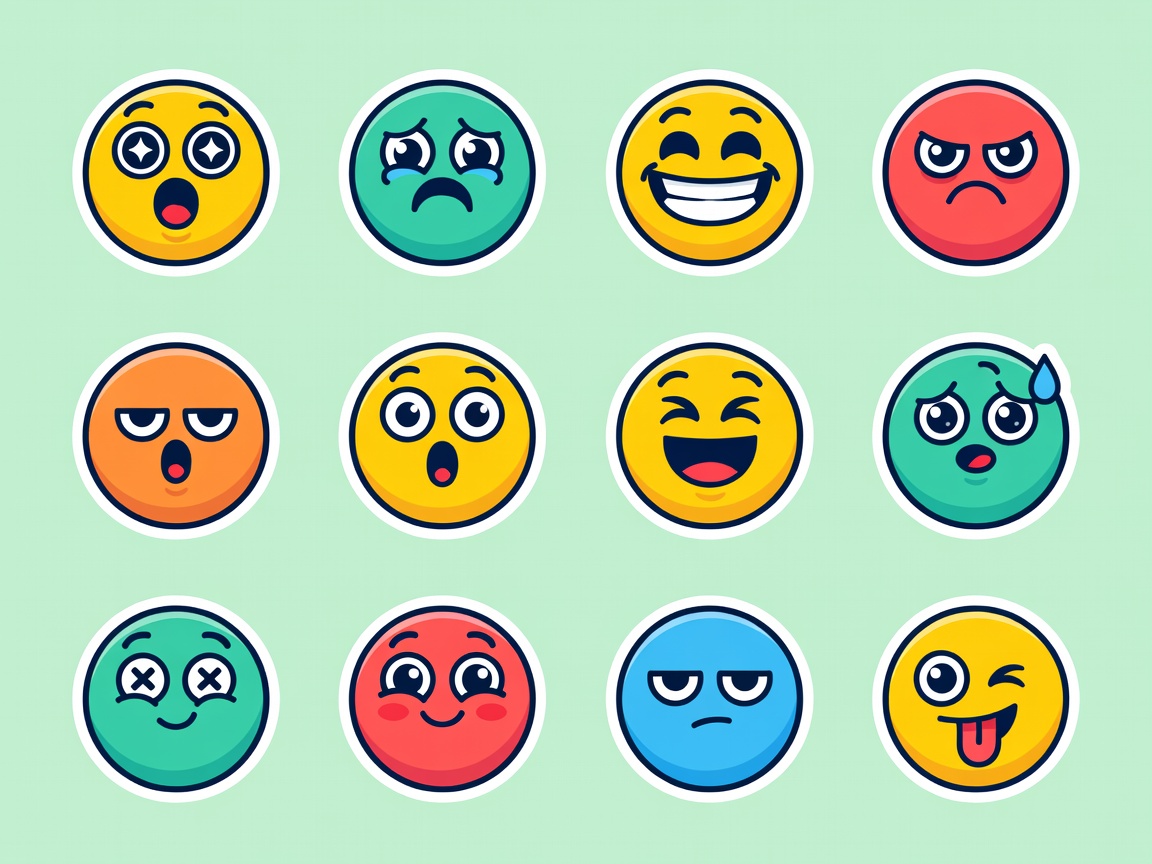
Flat vector sticker pack layout with twelve round mascot expressions arranged on a mint grid
Roots

From pocket pets to emoji

Bandai's Tamagotchi (1996) put a tiny pixel creature in millions of pockets and showed how strongly people bond with a simple digital character. In 1999 Shigetaka Kurita designed a set of 176 emoji for NTT Docomo's i-mode service; that original set is now in the collection of the Museum of Modern Art in New York.

Both prove the same point: when space is tiny, shape and expression do all the work.

Sticker culture

Characters as conversation

Messaging apps turned characters into vocabulary. LINE's Brown the bear and Cony the rabbit began as sticker characters around 2011 and grew into a full brand with stores and plush toys. Telegram, Discord and iMessage all support custom stickers or emoji, so independent artists can publish their own sets.

The best sticker characters have a few strong traits that can be exaggerated: a sleepy one, a dramatic one, a polite one.

Planning a set

The twelve-sticker starter pack

  1. Core emotions: happy, sad, angry, surprised, sleepy, love.
  2. Chat reactions: thumbs up, “thank you”, “on my way”, laughing.
  3. Signature moments: two poses only your character would do.
  4. Sketch all twelve small on one page before polishing any of them.

Plan the set as a grid from day one. Consistent framing makes the whole pack feel collectable.

Legibility

The squint test

Stickers and emoji are often seen at 32–72 pixels. Export a draft at 64 px and squint. Can you still tell happy from surprised? If not, exaggerate: bigger mouth shapes, simpler eyes, tilted heads.

Keep one outline weight across the whole set, and add a thick white border around stickers so they pop on both light and dark chat themes. Always check each platform's current size and file-format guidelines before exporting, as they change over time.

Avatars

Profile pictures and variants

An avatar is your mascot cropped into a circle. Design the head to fill about 70% of that circle, with eyes near the centre. Variants (new hats, seasonal colours, accessories) are a friendly way to build a collectible series without redrawing the character from scratch. Keep the base head locked and swap only the extras.

Series thinking

What makes fans collect

Collectible sets work when each piece is different enough to want and similar enough to belong. Use a shared palette, numbering (01/12), and one rare “special” design. Physical toy lines like blind-box figures popularised this rhythm, and digital sets borrow it directly.

Rights & caution

Licensing and tokens

If you created the character yourself, you generally own the copyright to your artwork from the moment it exists, but laws differ by country, and names or logos may need trademark protection. Never base a set on someone else's character.

Some collectibles are sold as blockchain tokens. These markets can be volatile and are often unregulated. We do not offer financial advice; treat them as an art distribution choice and read every platform's terms carefully.